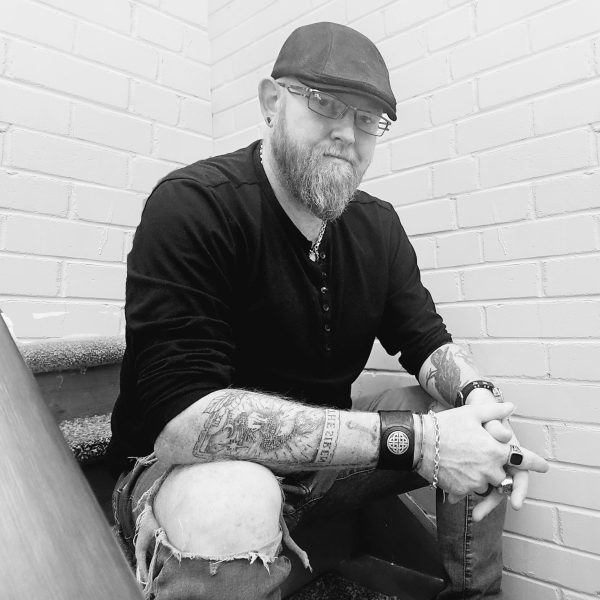
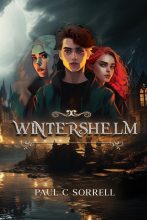
Wintershelm by Paul C Sorrell
What led you into writing?
“Imagine being told that the very thing you love—words—are your biggest obstacle.”
The short answer is 14. It was halfway through secondary school when I discovered I was dyslexic. Back then, there wasn’t much support—they just placed you in a special needs class and left it at that. But it was there that I met a teacher, Mr. B, who gave me one of the most valuable pieces of advice I’ve ever received. He told me, “Just start writing. Let your subconscious thoughts flow. It doesn’t matter what you write—just write and give your thoughts an outlet.” So, I did, and that simple advice changed everything.
How does a typical day look?
I don’t write every day; instead, I usually write every other day, with the bulk of my work happening over the weekends. I used to be a night owl, staying up late to get my writing done, but I just can’t keep up with that routine anymore.
In what ways do your characters test your abilities?
Many of my main characters are inspired by the women in my life and bringing them to life required me to slow down and reflect deeply on my own past experiences. Writing those scenes wasn’t exactly therapeutic, but I had to rely on therapeutic techniques just to navigate them. It was an emotional challenge that truly put my coping skills to the test.
What’s your setup?
My setup is pretty simple, but it works perfectly for me. The dining table serves as my writing space, providing plenty of room to spread out and get comfortable. At any given time, you’ll find it covered in an assortment of pens, notebooks filled with scribbled ideas, stacks of books for reference or inspiration, and my tablet, which I rely on for drafting and research. It’s a perfect blend of organized chaos—perhaps even a reflection of the way my creative mind operates. Though it may look messy to some, every item has its place, and the setup helps keep my ideas flowing.
What lasting effects have your favourite authors had on your writing and style?
The answer is simple—none. I’ve never tried to mimic other authors or let their styles seep into my subconscious. Every step of my writing journey has been on my own terms, for better or worse. I embrace my own approach, making mistakes and learning along the way, but always staying true to my own voice.
What do you do for inspiration?
I draw inspiration from dark folklore, eerie landscapes, haunting music, and the chilling depths of history, transforming them into worlds of beautiful decay and shadowed wonder. The presence of life and family lingers throughout my stories, their influence drifting like whispers on the wind. And then there are the ideas that seem to fall from nowhere—sudden, unexplainable, yet always waiting to be woven into the ever-growing tapestry of my imagination.
What repeating themes do you find yourself pulling into your stories?
I haven’t written much yet, but family remains a central thread in my work. I’m also drawn to exploring relationships forged through adversity—though they rarely take centre stage, they add depth to my stories. And, without a doubt, I have a soft spot for the darkness that lurks within!
How do you wind down?
I’m a huge fan of long-form podcasts, and in the early evening, if I’m not writing, you’ll usually find me sinking into the couch with a few episodes queued up. There’s something about deep, immersive storytelling or in-depth discussions that keeps my mind engaged. Having dyslexia means my thoughts are always racing, never quite slowing down, so I’m constantly drawn to things that offer creative stimulation. Whether it’s thought-provoking conversations, eerie true crime narratives, or explorations of history and folklore, podcasts have become one of my favourite ways to unwind while still feeding my imagination.
What sort of challenges do you regularly overcome while designing your world/setting?
I try to keep my worlds grounded in reality, leaning toward soft worldbuilding where details are revealed gradually, only when they’re relevant to the story. My biggest challenge is resisting the pull toward hard worldbuilding, which isn’t my style. While extensive lore and intricate details are popular with readers, I believe in knowing “just enough” and leaving room for imagination. I constantly check my writing to avoid info-dumping or unnecessary exposition, allowing the magic and otherworldly elements to simply exist within the story.
What are you reading at the moment?
I’m not reading anything at the moment—honestly, it’s a bit of a struggle—but I am listening to a selection of H.P. Lovecraft on audiobook. His eerie, atmospheric storytelling has a way of completely drawing me in, making for an incredibly immersive experience. There’s something about the way he builds tension and unease that keeps me captivated, even when I’m just listening rather than reading.
What’s the most useful advice you could give to an aspiring author?
Avoid measuring your success against others—publishing is unpredictable, and each of us is on our own journey. Every writer has a unique voice and story to share, so there’s no competition, only community. Celebrate your fellow authors while embracing your own victories, no matter how small—they all matter.
Tell us about the book you’re promoting.
Wintershelm is the first instalment in The Lament of Winter Saga, a four-part journey steeped in myth and mystery. Set against a distinctly British backdrop, the novel weaves a timeless tale of ancient folklore, pagan rites, and arcane rivalries, setting the stage for the epic that follows.
👋 Hi! I run Author Interviews