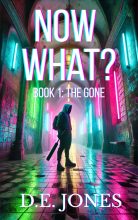
Now What? Book 1: The Gone by Dan Edward Jones
 Audible
What led you into writing?
As a teenager, I often came up with story ideas and would eagerly write a page or two, only to lose momentum and set them aside. More recently, studying Creative Writing with the Open University gave me the tools to develop my ideas from beginning to end. I’ve since fallen in love with the process — taking a blank page and crafting every element myself, from the characters and their names to the world they inhabit and the journey they take.
How does a typical day look?
My day job is working as an online English tutor, so my daylight hours are spent preparing lessons and teaching. But by night, I log out of all the apps and platforms associated with tutoring and step into my preferred role, writer. After dinner, I’ll put on a chilled playlist, slip on my headphones, take a sip of tea, and pick up where I left off. Most sessions start with me rereading what I wrote previously to refresh my memory before continuing. I’m not a big planner — while I keep documents with character details like age, relationships, and even their favourite music or films, I mostly write by instinct. I have a general idea of where the story is headed, but I like letting the characters and the moment guide the direction. From there, it’s simply me and the page until I call it a night.
In what ways do your characters test your abilities?
The biggest challenge for me is not getting too attached to my characters. My favourite genres to write are horror and thrillers, which means characters are inevitably going to die, and I have to be willing to let them go if it serves the story. It can be surprisingly emotional when you’re writing the demise of a character you like, so I try to keep that in check. Another challenge is getting into the mindset of characters who are very different from me — different ages, genders, and life experiences. I tackle this by drawing on books, films, and real-life people I’ve encountered, imagining how they would react in certain situations and channelling that into my writing.
What’s your setup?
I use an adjustable electronic desk, which means I can raise it if I feel like standing for a while. My chair is a gaming chair with a flexible backplate, which makes it surprisingly comfortable for long writing sessions. My laptop is a few years old now — still going strong, though probably due for an upgrade — and it’s hooked up to a large monitor with an external keyboard and mouse for added comfort. I keep a lamp nearby for those late-night sessions and, most importantly, my headphones. They’re essential for helping me tune out the world and fully immerse myself in the one I’m creating.
What lasting effects have your favourite authors had on your writing and style?
I’d say four authors have really influenced me. Citing Stephen King might sound like a cliché, but he’s undeniably my biggest influence. His ability to create so many different stories across almost every subgenre of horror, and even some only he could imagine, constantly pushes me to stretch my own creativity. Philip Pullman also shaped me, particularly in how he fuelled my imagination as my favourite author growing up. Then there’s Philip K. Dick. I’ve always admired his short stories, especially the way they deliver twists you never see coming. I’ve tried to bring some of that unpredictability into the Now What? series, so readers feel like anything could happen. Lastly, Suzanne Collins, I loved the dialogue in The Hunger Games. Her characters felt authentic and grounded despite the dystopian setting, and I’ve aimed for that same sense of believability in my own dialogue.
What do you do for inspiration?
I take a lot of inspiration from movies and TV shows, especially within the horror and thriller genres. When I’m writing about a particular subject, I’ll often watch films or series related to it to help spark ideas. Of course, it’s important not to copy but to be inspired by the way those stories and characters are crafted. Music is also a huge source of inspiration for me. I listen to an enormous amount — about 100 songs a day on average — and often find myself imagining scenes or stories while I listen. It’s almost like creating a soundtrack for my imagination.
What repeating themes do you find yourself pulling into your stories?
This is a tough one. One thing I always try to do is set my stories in the UK. While that isn’t exactly a theme, it’s an important element for me. There are already so many stories set in the United States with cultural references that sometimes go over my head, so I like the idea of including nods that British readers will recognise. That’s not to say I want to alienate international readers, but there’s something fun about someone from Ipswich or Tamworth reading a line and thinking, “Hey, I know that place!” As for recurring themes, survival definitely crops up a lot, as it’s such a key part of horror and post-apocalyptic fiction. Humour is another big one. I’m as much a fan of comedy as I am of horror, and I love the idea of readers laughing as often as they wince or gasp while reading my work.
How do you wind down?
Probably a boring answer, but I love nothing more than sticking on a good movie and sinking into my recliner with a beer. That’s my perfect way to switch off. Either that or lying outside with my headphones on during a hot day, letting the music take over.
What sort of challenges do you regularly overcome while designing your world/setting?
One of the biggest challenges I faced when writing the Now What? series was the size of the UK. It quickly made sense to me why so many post-apocalyptic stories are set in the USA — it’s simply bigger and gives characters more room to travel and explore. In contrast, I had to find ways to stop my characters from just hopping in a car and reaching their destination in a few hours. I also spent a lot of time using online maps to calculate realistic travel times, especially when characters were on foot. Another challenge was keeping track of the weather. Even though UK weather changes constantly, I wanted continuity in my story, so I had to remember whether the previous day had been sunny or rainy to keep it consistent for readers.
What are you reading at the moment?
I usually have a couple of books on the go. I’m a constant reader of Stephen King, and I’m currently nearing the end of The Shining in paperback. At the same time, I’m working my way through The Walking Dead graphic novels on my tablet. The TV series was a bit of an inspiration for the Now What? series, but I’ve always heard the graphic novels are even better, so I’m finally checking them out. I’ve finished the first volume and I’m about to dive into the second.
What’s the most useful advice you could give to an aspiring author?
Don’t wait for the “perfect moment” to start — just write. You can edit a messy draft, but you can’t edit a blank page. And don’t be afraid to share your work. It’s scary at first, but it’s how you grow. Since releasing my books, I’ve had mostly positive feedback, but like everyone, I’ve also had negative reviews. You can’t let them get to you. Read them, consider whether there’s anything useful to take on board, and then either act on it in future work or ignore it. Don’t let anyone put you off sharing your stories if writing is what you want to do.
Tell us about the book you’re promoting.
I’m promoting the first book in my series, Now What?, titled The Gone. It follows four teenagers who are thrown together by circumstance — namely, the end of the world. They’re forced to rely on each other despite not fully trusting one another as they travel north, facing countless challenges along the way, including the terrifying “Gone,” which are, for all intents and purposes, the undead. There are three books in total, and with the full series now released, readers can follow the journey from start to finish. I hope they enjoy reading it as much as I enjoyed writing it.
👋 Hi! I run Author Interviews