The Fontainebleau by Paul Bradley
What led you into writing?
When I first arrived in Spain in the early 1990s, the plan was to play golf, look around and eventually find something fun to do for a living. In those days. long before Google Translate, menu translations were often inaccurate and comical. Having struggled to understand ironed squid and raped shellfish, I approached the owner and pointed out what he was trying to sell me. He was horrified. I offered to produce a perfect version in four languages, and if he liked it, he could buy the printed versions from me… one small problem. I had no idea how to work a computer or churn out correct French and German versions… so… I bought a computer, sat and pushed buttons until I understood the rudiments. I bribed a couple of friends into helping with the translations, laid it all out with a fancy design, and presented it to the restaurant owner. Thankfully, he loved it and so did the restaurant next door… we were off. That expanded into guidebooks, real estate magazines, and escorting American alumni travel groups around Spain, which I continued until retirement. Then I started putting all the knowledge I’d accumulated about a foreigner living in Spain into a crime mystery series… The Andalusian Mystery Series. The sixth volume, Darkness in Gibraltar, set in the wartime tunnels, blends mystery with historical fiction, was launched at the Gibraltar Literary Festival last year at the Spirit of the Rock Distillery. A local school uses the book to teach history through fiction.
How does a typical day look?
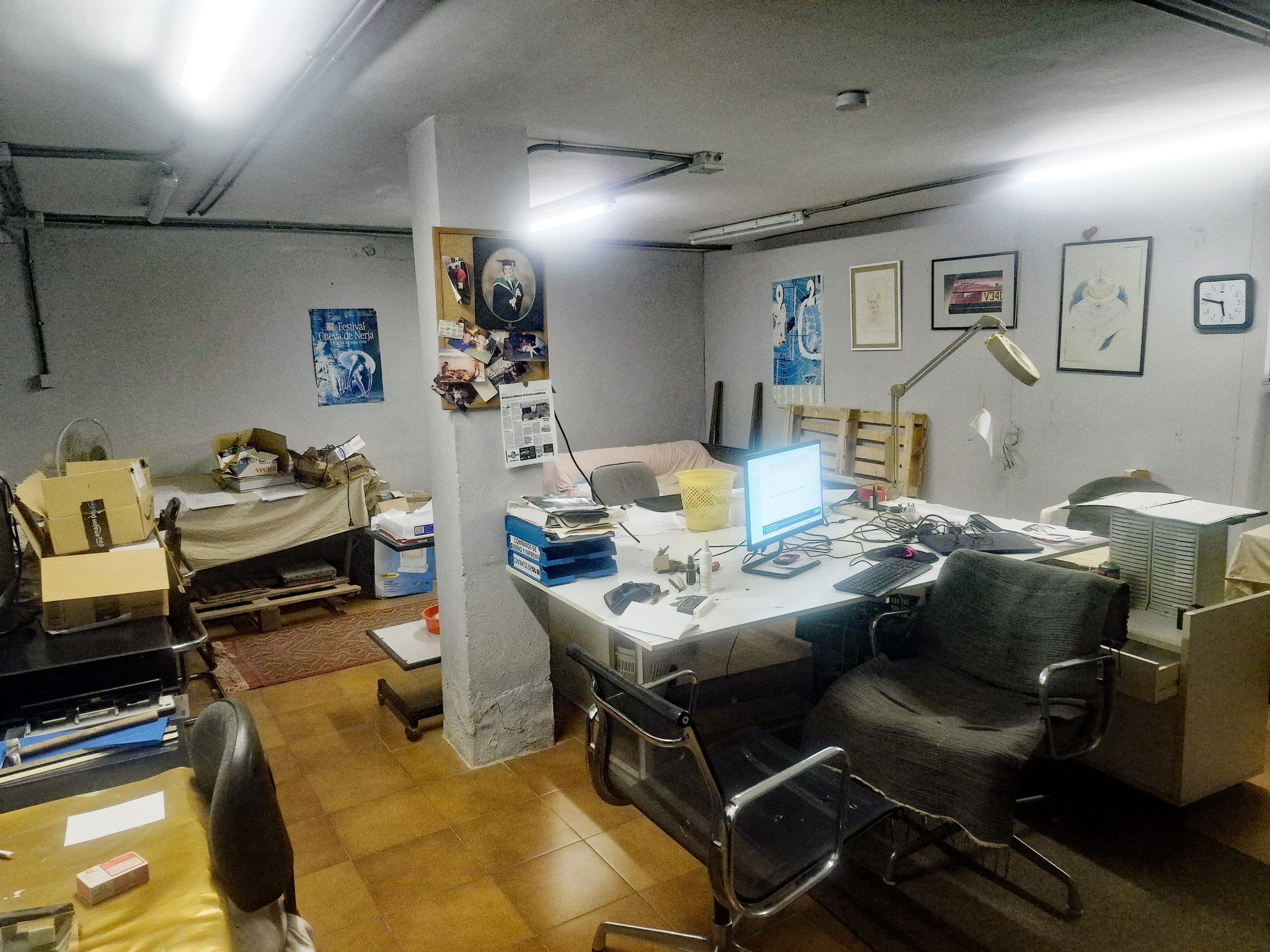
This is Spain, and I work from home. Everything I need is within 500 m of my townhouse in central Nerja. So, no commuting, no stress, no employees and a wander along the beach every morning. Just some of several rules I committed to on my arrival here after a business career in London. After breakfast with my wife, I retire to my studio in the basement and edit the writing from the previous day. Coffee with my wife at ten, followed by a walk for an hour, then back to the studio until lunch at two, followed by a siesta… Spain’s finest legacy to the world. The afternoon session starts around three-ish, and I work on my latest project until around 7, when I rejoin the real world for tapas with friends and family or watch Leicester City get hammered yet again.
In what ways do your characters test your abilities?
My latest book, Don’t Tell Dawn, is a psychological Thriller inspired by my own experience of living in fear from a family member suffering from addiction and mental illness. The main character is a teenage girl. While I have daughters and grandsons, nothing could have prepared me for the challenge of trying to put myself into the mind of a modern young female. Help, shouted loudly, was required. My usual editor is a hairy scouser, excellent at keeping me on the right, mainly masculine lines of the mystery series but completely inappropriate skills for this challenge. So, I found Sorrel Pitts, the developmental editor of the best-selling book and popular film, Girl on a Train. She loved the idea, and after the dreaded first draft was done, we are now about to start the line edit. Believe me… from what I have learned via Sorrel, I am extremely happy… like… not to have a modern teenage girl in my own household.
What’s your setup?
My studio is a spacious, cool, and airy place to work that has, over the years, accommodated co-workers (freelancers), a wide variety of scanners, printers, desktop computers, and a wine collection. The wine is long gone, as are the scanners. I still have copies of each of my publications from over the years and a stock of novels to top up local bookshops. It is also home to numerous hard drives, cables and my first digital camera. A massive, heavy thing from Olympus that still works, but can only take 4 high-res photos before downloading the files, which takes at least a minute to write to disk. How technology has moved on. What I particularly enjoy about the setup is that I can close the door at the end of play and leave my mess intact, ready to accumulate even more mess tomorrow. Out of sight but never quite out of mind, which, as my wife often reminds me, is the bane of most writers. We never stop thinking.
What lasting effects have your favourite authors had on your writing and style?
Mysteries have always been my escape preference. Earlier, Wilbur Smith and Alistair MacLean; nowadays, Harlan Coben and Ian Banks. In my own humble way, I try to emulate their approach because if I like reading them as millions of others do, then hopefully those same readers will enjoy mine.
What do you do for inspiration?
Inspiration flows daily in many shapes and sizes, usually spurred by travel or people’s own stories that I can twist into a mystery or psychological thriller. For example. I was in the Lake District in England last year with a travel group and met an oddball character who had built a multi-billion-dollar software company and sold it on. She was single, attractive and loved travelling. However, we had this really interesting conversation about how unsure she was of people’s motivations for talking to her. Always the unspoken question lay in the background: what do you really want from me? It gave me a great idea for my next book, and I immediately rushed to my laptop and tapped out an outline. I can’t wait to finish the current book and move on to this next one.
What repeating themes do you find yourself pulling into your stories?
Lately, probably because I’m longer in the tooth, I’ve been more reflective. I guess I’m trying in my own way to understand the meaning of life in general and how it applies to everyone in different circumstances. My first attempt at this was Nostalgia Man in Henley-on-Thames. An elderly retired policeman struggles to solve a personal mystery of his youth concerning former girlfriends. After fifty-odd years, he returns to Henley, where I actually lived in the 1960s, to see whether the place itself prompts his fading memory. It produces some surprising outcomes. In the book, I used the actual names of old friends I knew during my time there. Amazingly, a few have been in touch after fifty years. A heartwarming experience. I shall continue along these lines for my next books.
How do you wind down?
A pleasant supper on my roof terrace with my wife, enjoying mountain views and a glass of excellent Spanish wine, is the perfect ending to another wonderful day in my adopted country. However, I came here to change my life away from the constant, stressful cycle of winding myself up to a fever pitch for another hard day in business. I’ve had over 30 years of Spanish tranquillity and hopefully many more to come.
What sort of challenges do you regularly overcome while designing your world/setting?
Every sentence is a new challenge. Rewriting it probably three times before it approaches somewhere near done is par for the course. Stopping halfway through because I realise what I’ve written is total garbage and needs actual research to be anywhere near realistic. I don’t do fantasy. Then having to do it all over again when it comes back from the editor…and then again.
What are you reading at the moment?
I’m reading Derek the caretaker who cared (kind of) by Chiquita J Arnot. My review below sums it up perfectly.
Derek the Caretaker, Who Cared (Kind Of), is the second novel by Chiquita J. Arnot, set in a British primary school that seems to run on tea, biscuits, chaos, and mild panic. Imagine Colditz Castle crossed with Stalag Luft III… only with ankle-high escape artists, teachers one tea break away from mutiny, and enough glitter glue to immobilise a small tank. The pupils scheme with the tactical brilliance of tiny generals, the staff patrol the corridors like exhausted sentries, and somewhere in the middle lurks the ever-wily Derek, armed with a bottomless toolbox, a sigh of inevitability, and the grim knowledge that the building may be plotting against him. The result is a battle of wits that veers cheerfully from hilarious to completely bonkers. A thoroughly entertaining read.
What’s the most useful advice you could give to an aspiring author?
Writing is a never-ending learning curve that you can only experience by doing it. If you want to be good and your motivation is to sell what you write, accept that writing is only part of the publishing process. However, it is not a journey anyone should take on their own. Every book needs a team. A brainstormer, several test readers, editors, illustrators, agents and publishers. My best advice is to work with the best editor you can afford.
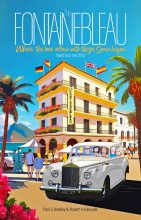
Tell us about the book you’re promoting.
The Fontainebleau was a famous hotel here in my hometown of Nerja, built by an English family in the mid-1970s. It was knocked down in 1998. It’s where the English love affair with the town began. It’s a true story of the Edwards family as told by the youngest son, Robert. Think Fawlty Towers meets Benidorm and you’re on the right lines. It’s a light-hearted romp of Brits who have never been further than Skegness, Blackpool or Lyme Regis on their first trip abroad, coupled with the agony of linguistically inept Brits trying to make a business work in a building on the verge of falling down.
👋 Hi! I run Author Interviews